
Дрони докорінно змінили сучасну війну. І поки у всіх на слуху «FPV-шки», важкі бомбери тихо роблять свою гучну роботу. Компанія Pegasus Arms підбила підсумки 2025 року, поділившись результатами роботи своїх «літаючих конячок». І вони виявились досить вражаючими.
Ще в 2024 році дроном Pegasus Arms 25 була знищена російська важка вогнеметна система залпового вогню ТОС-1А «Солнцепек» вартістю $15 млн. І на сьогодні це найдорожча підтверджена ціль. Проте сумарно за 2025 рік втрати російської армії вже складають мільярди доларів. Адже на фронті працюють понад 1 500 БПЛА Pegasus Arms 25 — ними оснащений кожен другий підрозділ СОУ.
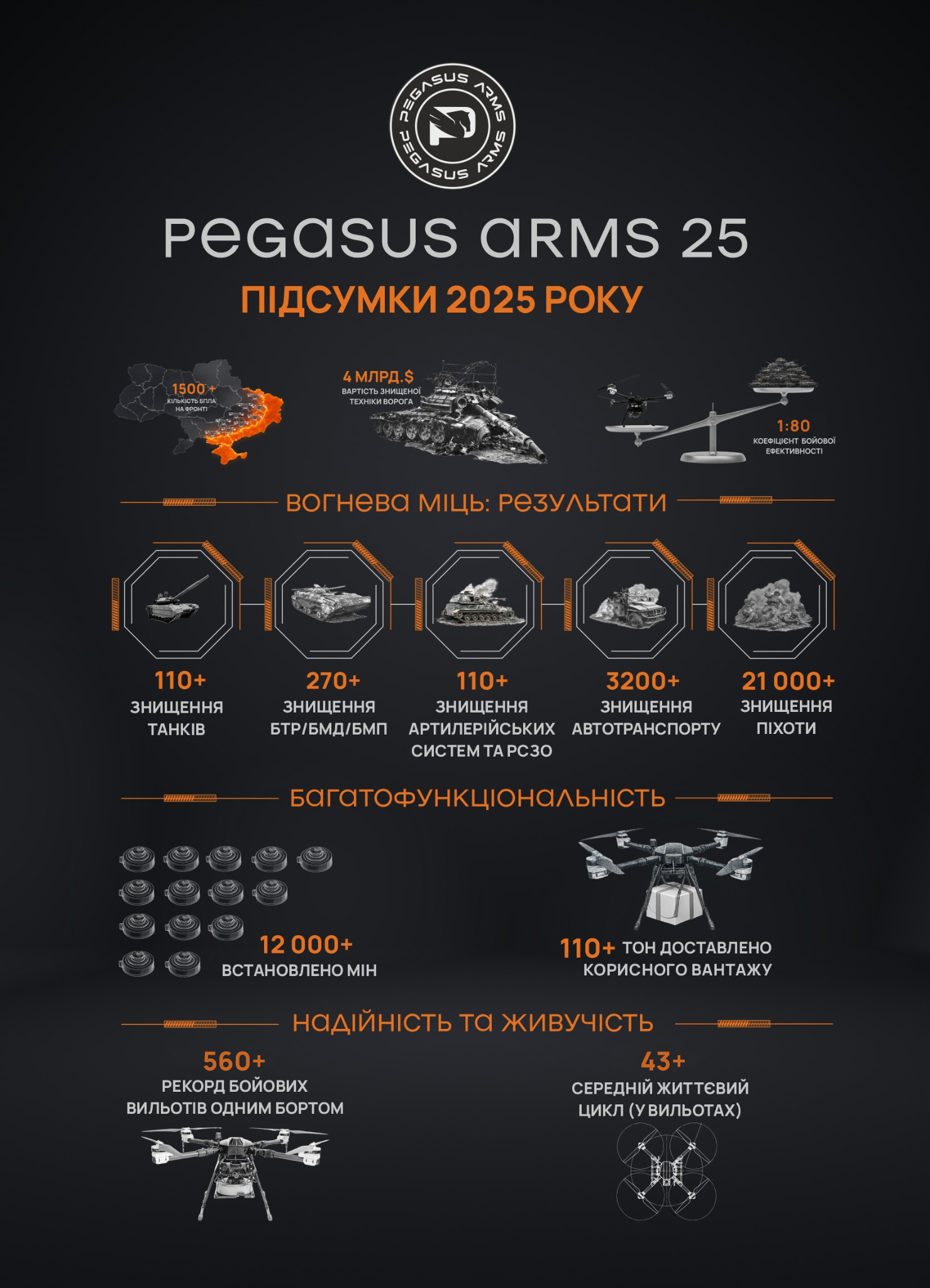
Загалом за минулий рік на рахунку екіпажів Pegasus Arms 25 понад 110 танків, 270 БТР, БМД та іншої бронетехніки. Також спалено три тисячі одиниць автотранспорту, зруйновано сотні бліндажів та укриттів, а також артилерійських систем та РСЗО. Ну а кількість враженої піхоти йде на десятки тисяч.
Така висока продуктивність має кілька пояснень. Одне з них — Pegasus Arms 25 здатен нести 14 кг боєприпасів для скидів чи дистанційного мінування. Модульна система підвісів дозволяє швидко переналаштовувати його під різні типи корисного навантаження. В тому числі дрон може використовуватись для логістичних цілей — доставки води, продуктів, ліків чи боєприпасів на позиції.
Другий фактор продуктивності — аномальна «живучість». Так, один із бортів здійснив вже понад 560 бойових вильотів і продовжує службу. Це беззаперечний рекорд і унікальний результат для БПЛА подібного класу. Ефективності розрахунків дронів сприяє якість самих безпілотних комплексів та їх постійна модернізація, а також якість навчання екіпажів, що здійснює «НЦВТ МІСТ» та інші навчальні центри.
«R&D відділ Pegasus Arms постійно вдосконалює наші дрони та станції управління. В середньому кожні два місяці виходить оновлення ПЗ та покращення технічної частини. І при кожному ТО, на які екіпажі привозять свої дрони, наша сервісна служба модернізує їх. Таким чином, підрозділи, що використовують Pegasus Arms 25 в бою, можуть зі 100% впевненістю покладатись на них, адже їх БПЛА враховують останні інновації цієї технологічної війни», — розказав Ілля Самошкін, керівник Pegasus Arms.
Третім фактором «виживання» Pegasus Arms 25 є просунута система зв’язку, шо здатна діяти в умовах активних радіоперешкод. Екіпажі не втрачають зв’язок з дроном і мають чітке зображення з камери, для виявлення та знищення цілей в зонах дії систем РЕБ, де інші борти не здатні діяти. Більш того, цей дрон може опціонально оснащуватись власною системою РЕБ для протидії ворожим FPV-дронам.
«Дрони Pegasus Arms 25 єдині в Україні і, скоріш за все в світі, які можуть оснащуватись власною системою РЕБ. Саме так, вони не тільки здатні працювати в умовах роботи ворожих систем РЕБ, а й мають власний РЕБ на борту для протидії ворожим FPV-дронам. Наші спеціалісти створили унікальну систему, що має малу вагу і розмір, і при цьому ефективно протидіє ворожим «пташкам», — розказав Ілля Самошкін, керівник Pegasus Arms.
В планах Pegasus Arms на 2026 рік — суттєво збільшити кількість дронів у війську, адже модель Pegasus Arms 25 відмінно зарекомендувала себе в бою і постійно вдосконалюється під вимоги військових. Проте нові виклики потребують нових розробок, тому вже найближчим часом компанія Pegasus Arms презентує рішення, щоб зробити Українське небо чистішим від ворожих дронів.
Про Pegasus Arms
Pegasus Arms — українська компанія оборонних технологій, яка розробляє, виробляє та впроваджує ударні безпілотні авіаційні комплекси (БпАК), стійкі до засобів радіоелектронної боротьби (РЕБ). Заснована у 2023 році, компанія стала одним із драйверів miltech-сектору, працюючи пліч-о-пліч із Силами оборони України.
БпАК Pegasus Arms 25 — безпілотний авіаційний комплекс, розроблений українськими інженерами з урахуванням сучасних викликів на полі бою. Система поєднує високу ударну ефективність, стійкість до засобів РЕБ та адаптивність до завдань різної складності. Завдяки БпАК Pegasus Arms 25 підрозділи отримують автономний інструмент для ураження техніки, живої сили, інженерних споруд без прямих втрат серед особового складу. Це рішення, яке зберігає життя, скорочує час на виконання завдання та дозволяє діяти незалежно: у будь-який час доби, складних метеоумовах, у режимі автономного повернення та стійкості до РЕБ.
Комплекс активно використовується підрозділами Сил оборони України по всій лінії бойового зіткнення.